
Andhra Pradesh has launched India's first quantum reference facility, aiming to build a sovereign hardware ecosystem and boost indigenous manufacturing of advanced computing systems.

Kalyani Strategic Systems' subsidiary, Agneyastra Energetics Ltd, has commenced construction of a Rs 1,500-crore defence manufacturing facility in Andhra Pradesh, aiming to enhance India's indigenous defence capabilities and generate employment.

A tech firm has delivered to the Army 106 turbojet-powered kamikaze drones designed to engage high-value targets deep inside enemy territory and operate in contested electromagnetic environments, according to a statement.

Andhra Pradesh is set to launch India's first indigenously built, open-access quantum computers, marking a significant step towards building a sovereign quantum hardware ecosystem. The initiative aims to position the state as a global hub for quantum technology and enable applications in various sectors.
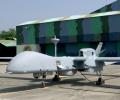
The Indian government is planning to develop an unmanned combat search and rescue aircraft for the Indian Air Force, designed to operate autonomously and in challenging terrains.
Prime Minister Narendra Modi, in his 'Mann Ki Baat' broadcast, highlighted India's recent achievements in self-reliance, including the maiden flight of the made-in-India C-295 aircraft and the induction of indigenous naval ships. He also lauded the global participation in International Yoga Day and India's success at the World Yoga Asana Championship, alongside Nalanda University's revival of the 'Shastrarth' tradition.
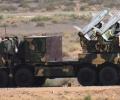
India's defence sector is on the cusp of a 'super cycle' of growth, driven by escalating geopolitical conflicts and a strong policy push towards indigenous manufacturing, with major players like BEL, HAL, and BDL poised for significant order inflows and technological advancements.

'The share of the private sector is at its all-time high of around Rs 42,000 crore in FY26, reflecting its expanding role in the defence ecosystem.'
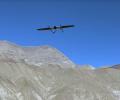
The 515 Army Base Workshop in Bengaluru has signed multiple strategic MoUs to bolster indigenous drone manufacturing and ecosystem resilience, marking a significant step towards modernisation and self-reliance in unmanned systems.
The 515 Army Base Workshop (ABW) in Bengaluru has signed multiple MoUs to strengthen indigenous drone manufacturing and ecosystem resilience, marking a significant step towards modernisation and self-reliance in unmanned systems.

India's annual defence production has reached an all-time high of Rs 1.78 lakh crore in FY 2025-26, marking a significant 15.6 per cent growth over the previous fiscal year. This achievement reflects a 110 per cent increase since 2020-21 and highlights the country's expanding defence industrial base, driven by policy support and increased private sector participation.

Union Minister Ashwini Vaishnaw chaired a meeting focusing on Artificial Intelligence, emerging technologies, and electronics hardware manufacturing, highlighting India's progress and future roadmap in these sectors.

Defence Minister Rajnath Singh has emphasised the need for India to develop a robust drone manufacturing ecosystem to enhance its defence capabilities, drawing lessons from recent global conflicts.

Indian startup funding plummeted by 43 per cent year-on-year to $7.81 billion between March 1 and June 15, 2026, largely due to the West Asia conflict, which has amplified global risk perceptions, tightened liquidity, and led to rupee depreciation, making global investors cautious.

Karnataka is rolling out the first batch of 2,000 indigenously developed AI-ready KEO PCs, priced at Rs 18,999, to rural libraries and educational institutions. This initiative aims to extend artificial intelligence and digital literacy beyond urban centres, supporting students with AI skills, spoken English, and competitive exam preparation, even in areas with limited internet connectivity.

In the race for 87 Medium-Altitude Long-Range, Endurance unmanned aerial vehicles deal, around 10 bids have been received from Indian private and public sector firms.

Pakistan is reportedly pursuing Chinese J-35 stealth fighters while China already operates hundreds of J-20 stealth aircraft.

Russian President Vladimir Putin has offered New Delhi Russia's fifth-generation stealth aircraft Sukhoi Su-57 and even suggested that the combat jet could even be jointly produced in India in line with the strong strategic partnership between the two countries.

Adani Group and Brazilian aerospace firm Embraer have selected Dholera, Gujarat, as the location for a final assembly line for Embraer's regional jets. This strategic collaboration, formalised by an MoU in January, aims to boost India's Regional Transport Aircraft programme and align with the Aatmanirbhar Bharat initiative and UDAN scheme. Embraer sees immense potential in the Indian market across various aviation segments.

Israel Weapons Industries (IWI) has delivered the first batch of NEGEV 7.62x51 light machine guns to India under the 'Make in India' initiative, marking a significant step in India-Israel defence cooperation and indigenous defence manufacturing.

The Indian Air Force is set to procure a compact, indigenous unmanned aerial vehicle (UAV) system for its elite Special Forces unit, designed to operate in extreme conditions and high altitudes.

A lesson for India is to clearly define objectives beforehand, so that the adversary or other parties do not attempt to mitigate them midway.

India has successfully conducted the maiden salvo launch of the indigenously developed Naval Anti-Ship Missile-Short Range.
Andhra Pradesh Chief Minister N Chandrababu Naidu marked World Telecommunication and Information Society Day by emphasising the state's growing quantum technologies ecosystem and the importance of secure digital infrastructure.

TARA is India's first indigenous modular glide weapon, capable of transforming conventional unguided warheads into long-range precision-guided weapons.

The Indian defence ministry has initiated a project to indigenously design and develop a 1000-kg aerial bomb for the Indian Air Force (IAF), aiming to enhance self-reliance in the defence sector.
Despite a disappointing Q4 FY26 performance, many analysts remain bullish on Hindustan Aeronautics (HAL) due to its substantial order book and pipeline. However, persistent supply chain issues, particularly for jet engines, and execution challenges are key factors that could impact its future stock performance and revenue growth.

Loitering munitions, often described as 'suicide drones' or 'kamikaze drones', are becoming central to modern warfare because of their ability to hover over target areas, identify threats and strike with high precision.

India's 500 MWe Prototype Fast Breeder Reactor (PFBR) at Kalpakkam in Chennai has achieved first criticality, marking a significant advancement in the country's nuclear energy capabilities and long-term energy security.

Army Chief General Upendra Dwivedi emphasized the importance of indigenous equipment for the Indian Army, highlighting the force's modernization efforts and readiness for future warfare.

Insights from behavioural economics suggest that an ambitious nudge can be effective if three conditions are met, points out Ram Singh Insights from behavioural economics suggest that an ambitious nudge can be effective if three conditions are met, points out Ram Singh, director, Delhi School of Economics.

India's defence exports reached a record high of Rs 38,424 crore in fiscal year 2025-26, marking a significant increase of over 62 per cent compared to the previous year, according to Defence Minister Rajnath Singh.

'In all these years of rupee depreciation, of rising oil prices, of inflation caused by import dependence, not one leader had the courage to look the people in the eye and say: Please do this for your country.'

India's home-grown EV startups say the government's auto PLI scheme is helping big players while shutting out innovators building electric two- and three-wheelers from scratch.

AI reduces the time taken to find a target and launch a strike. This has led to a major increase in the pace of the conflict, with one report mentioning nearly 900 strikes launched on Iranian targets in the first 12 hours of an operation.

The Indian Air Force (IAF) is establishing a maintenance facility for GE Aerospace's F404-IN20 jet engines, which power the Tejas light combat aircraft, with technical support from GE Aerospace. This initiative aims to enhance India's indigenous defence capabilities and reduce reliance on overseas repair centres.

The Centre has notified the Scheme to Promote Manufacturing of Sintered Rare Earth Permanent Magnet (REPM) with an outlay of Rs 7,280 crore. The initiative is targeting to reduce dependence on China for critical inputs and secure supply chains for EVs, electronics, aerospace and green energy.

Prime Minister Narendra Modi is set to inaugurate a semiconductor plant in Sanand, Gujarat, and launch multiple development projects worth over Rs 20,000 crore, marking a significant boost to India's semiconductor industry and infrastructure.
The government on Wednesday approved a Rs 7,280 crore scheme to promote manufacturing of rare earth permanent magnets, a move which would help reduce India's dependence on China.

Jindal Steel has successfully deployed syngas in its galvanising and colour coating line furnaces to combat shortages of natural gas, LPG, and propane. This innovative approach allows the company to sustain operations and promotes energy self-reliance.
